
There are thousands of online stores operating in Greece. Most remain limited to turnovers of up to €100,000 per year, while a small percentage, the famous 1%, manages to overcome the €500,000 barrier.
Have you ever wondered what makes this 1% different?
It's not always the product, nor the "unique idea". The secret lies in the systematic application of optimization practices, in strategy and in mindset. It's dozens of small steps that accumulate and lead to explosive growth.
Below we will analyze How you too can transform your eshop from a small 50K store into a 500K+ business, following the example of 1%.

Checkout: The Point Where You Win or Lose the Customer
Checkout is the most critical stage of any e-shop. You may have invested in SEO, advertising, and content, but if your customer is disappointed at the last minute, then everything is wasted.
According to research by the Baymard Institute, the 69.8% of baskets are abandoned before payment is completed. This means that seven out of ten customers who reach the checkout leave without making a purchase.
Important Clarification
The percentage of 69.8% is a global average, based on dozens of studies from Europe and the USA. In Greece, there are no corresponding extensive data, but the trend is the same, that is, in every e-shop, the majority of carts are abandoned. It does not mean that all stores have 69.8%, but that the problem is generalized.
What do 1% eshops do differently:
- One-page checkout: Everything on one page: details, payment, confirmation. Customers don't get tired.
- Guest checkout: Purchases are allowed without mandatory registration and account creation. This reduces friction, i.e. the obstacles and delays that discourage them from completing the order.
- Express payments: Integrate wallets or save cards for one-click purchases.
- Psychological triggers: Progress bars, trust badges and clear cost disclosures enhance trust.
Common mistakes:
- Mandatory account creation.
- Complex forms with many fields.
- Limited payment methods.
- Checkout that is not mobile-friendly.
Example
A fashion eshop in Europe, with a turnover of approximately €80,000, added one-page checkout and express payments. Within 6 months, abandonment fell from 68% to 52%, raising its turnover to €120,000 without an increase in the advertising budget.
You don't need more traffic. You need a checkout that converts visitors into customers.
Product Titles That Sell. From SEO to Micro-Copy Details
Many eshops underestimate the importance of product titles and descriptions. A title like “K123 Dress” tells nothing to the customer, nor does it help search engines. 1% eshops use data-driven descriptions that improve SEO and increase sales.
What do they do differently:
- Clear categorization: “Long Pastel Yellow Dress – Summer 2025” instead of “Dress K123 yellow”.
- Keywords that users search for: They are drawn from Google Trends and SEO tools.
- Micro-copy who answers questions: “Comfortable for all day”, “Easy to wash”.
- Structured data (schema markup): Products appear more attractive on Google.
Important Clarification
According to Google, optimized product titles can increase CTR by up to 20-30%. This is true internationally, but in Greece we also see similar results in eshops that work with SEO data.
Common mistakes:
- Titles full of codes.
- Descriptions without informational value.
- Copying texts from suppliers (duplicate content: SEO problem, low differentiation, reduced CTR, low reliability).
Example
In a women's clothing e-shop, changing titles like "Dress 554 black" to titles like "Long Black Cotton Dress - Spring 2025" increased organic traffic by 40% in 5 months.
CRM and Automations: Not Just Newsletters
Most e-shop owners send out occasional newsletters. However, 1% uses CRM and automations that “work” in the background.
What do they do differently:
- Abandoned cart series: 2-3 emails with tiered incentives (e.g. discount coupon in the third email).
- Post-purchase communication-purchase follow-up): Thank you email and suggestion of related products.
- Reactivation campaigns (Win-back campaigns): Messages to customers who haven't purchased for 60+ days.
- Personalization: Emails based on previous purchasing behavior.
Important Clarification
Research shows that abandoned cart emails have a medium open rate 40%+ and conversion rate up to 10%. In Greece, these numbers are lower, but the profit remains huge for any eshop that implements such flows.
Common mistakes:
- Mass newsletters without segmentation.
- Lack of automation.
- No strategy for win-back.
Example
In a cosmetics e-shop, an abandoned cart flow increased monthly turnover by 18%.

Advanced Analytics: What's Beyond Google Analytics
The basic Google Analytics “sales per day” report isn’t enough. 1% looks much deeper.
What do they do differently:
- Heatmaps and session recordings: They understand where the user gets stuck.
- Cohort analysis: They study how many customers return per month.
- Conversion tracking at all steps: From add-to-cart to checkout-start.
- CLV (Customer Lifetime Value) Calculation: They know the value of each customer.
Important Clarification
Studies show that e-shops that measure CLV invest more effectively in marketing and have up to 25% higher profits in the long term.
Common mistakes:
- Focus only on daily sales.
- Absence of monitoring in intermediate steps.
- No insight into customer value in the long term.
Example
A Greek electronics e-shop increased its ROI by 22% in one year after introducing CLV and stopping chasing only short-term campaigns.

Content That Is Not Copied
Stock photos and generic SEO articles don't make the customer remember your brand. They make you look the same as everyone else. The few eshops that stand out invest in authentic content, their own images, their own texts, real experiences. This is how they gain trust and build a loyal audience.
What do they do differently:
- Unique product photography with a consistent aesthetic.
- User-generated content from customers.
- User guides (how-to) and storytelling.
- Short videos for social and landing pages.
Important Clarification
Research shows that customers trust 2.4 times more the UGC (User-Generated Content) in relation to content produced by the company itself.
Common mistakes:
- Use of stock photos.
- Content that doesn't provide value.
- Lack of consistency in style.
Example
An e-shop selling fitness equipment that asked its customers to upload photos with the hashtag #homeworkout saw up to 35% increase in engagement and 18% more sales within the first month.

Performance and Hosting: The Secret Basis of Success
Loading speed and hosting reliability are not “luxuries.” They are the foundation of every successful eshop.
What do they do differently:
- Modern web server (NGINX or LiteSpeed): optimal request management.
- Modern PHP version with OPcache: increased speed for WordPress/WooCommerce and other CMS.
- Object caching (Redis/Memcached): reduces the load on the base.
- Full-page caching: with proper WooCommerce compatibility.
- CDN: for global content distribution.
- WebP images + lazy loading: lighter images that load only when needed, for a faster user experience.
Important Clarification
According to Google, every 1 second delay in loading can reduce conversions by 71%3T. In practice, a difference of 2-3 seconds equates to thousands of euros in lost sales.
Common mistakes:
- Shared hosting with limited resources.
- Use of heavy themes/plugins.
- Indifference to mobile speed.
- Lack of proper image optimization.
- Absence of caching mechanisms.

Continuous Improvement Mindset: The Secret of 1%
The 1% of eshops does not consider anything “finished.” They have a mindset of continuous improvement: they test, measure, correct.
What do they do differently:
- A/B testing: Testing different layouts, CTAs, offers.
- Experiments in prices and bundles: Analyze which pricing strategy or product combination brings in more sales.
- UX testing with real users: Observing how they move around the e-shop and identifying points that cause difficulty or abandonment.
Important Clarification
Studies show that e-shops that implement systematic A/B testing have up to 50% higher conversion rates from those that do not apply testing.
Common mistakes:
- Zero tests.
- Changes “by eye” without data.
- Lack of improvement mentality in the team.
Example
An e-shop changed the color of the checkout button from gray to green and saw a 11% increase in sales in just two weeks.
1% Doesn't Just Rely on Ads, It Builds an Organic Growth Strategy
Most e-shops, when they want to increase their turnover, follow the simplest path: they spend more money on advertising.
However, 1% knows that campaigns are only the “fuel” and not the vehicle. For real growth to occur, a comprehensive growth framework is needed that does not depend solely on budget.
What do eshops do differently? of 1%:
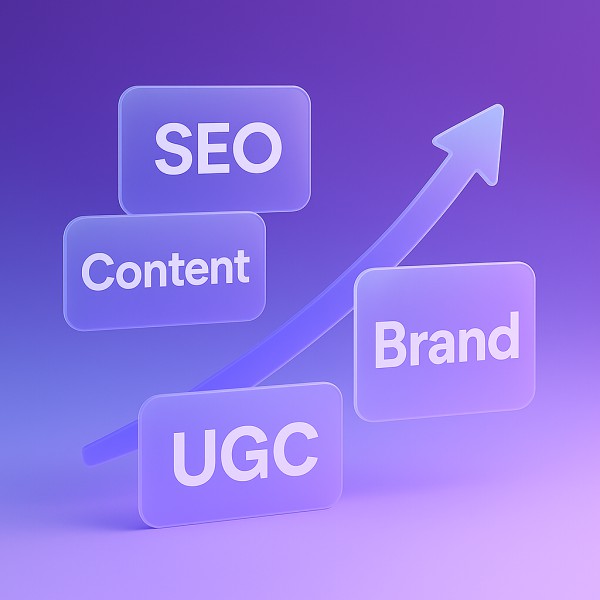
- They combine ads with organic traffic: They invest in SEO, content, and communities that bring in customers at a lower cost of acquisition (CAC).
- They build a brand which remains unforgettable: storytelling, user-generated content, consistency in image and messages.
- They measure CLV and invest in retention: They know that the biggest profits come from customers who return again and again.
- They differentiate the channels: Google, Meta, TikTok, email marketing, affiliate marketing, PR, partnerships. They don't let their survival depend on one platform.
- They invest heavily in email marketing: the most efficient retention channel and the only one that truly belongs to the business.
- They build communities around the brand: groups on social media, loyalty & referral programs that bring word of mouth.
- They produce original video & shorts-form content: Reels, TikTok, YouTube Shorts that bring organic reach and engagement.
- They build excellent eshops with modern tools: fast, secure, with mobile-first UX and scaling capabilities. A properly structured store is the core of any growth strategy.
Common mistakes:
- 100% dependency on Facebook/Instagram/Google Ads.
- No strategy for organic growth (SEO, content, UGC).
- Absence of clear brand positioning.
- Underestimation of the technical basis of the eshop (slow, difficult to use, outdated sites).
Example:
An e-shop with an advertising budget of €5,000 per month had a turnover of approximately €40,000/month. With a content production strategy and an upgrade to modern cloud hosting, within 12 months it reached €65,000/month with the same budget.
What was implemented:
- SEO optimized blog with articles that answered real customer searches.
- Optimized product titles and descriptions with keywords that increased organic traffic.
- UGC campaigns on Instagram, where customers themselves uploaded photos of the products using branded hashtags, boosting credibility and engagement.
- Upgrade to modern cloud hosting, which improved the speed and stability of the eshop.
Result:
- 35% of total revenue now came from organic channels (SEO, content, UGC) instead of paid advertising.
Organic growth is not a "luxury", it is what gives real value, durability and long-term stability to the brand.

Outdated Eshop Design Becomes an Obstacle to Growth
The design of an eshop It is not a static project. It is a living organism that needs constant evolution. The aesthetics, layouts and user experience (UX) must be refreshed, otherwise the site looks stagnant and tires the audience. And when the audience tires, then they stop interacting with the brand, reduce their purchases and turn to competitors that seem fresher and more up-to-date.
Refreshing is not about changing colors or a few icons. It is a strategic move that should take into account:
- New usage habits (mobile-first, social commerce, voice search).
- Modern presentation tools (video showcases, AR previews, interactive galleries).
- Design that creates freshness and energy and conveys the message that the brand is constantly evolving.
An e-shop with an outdated design acts as a brake. An e-shop that is strategically renewed every 2-3 years acts as an accelerator.
Example:
A fashion e-shop kept the same design for 4 years. Despite having stable traffic, the conversion rate dropped from 2.3% to 1.4%. After a redesign with a mobile-first approach and modern aesthetics, the conversion rate rose to 2.8% within 7 months. This change translated into additional +8,000€ monthly turnover, without any increase in the advertising budget.
Every month with an outdated design is a step back in growth, the audience gets tired, the competition advances, the damage from lost sales becomes greater, trust decreases and more customers turn to fresher brands. Fresh brands attract customers because they offer a better user experience, modern aesthetics and the feeling that they are evolving with the needs of the market. A modern aesthetic eshop is not only a reward for the customer who supports it, it is also a reason to feel proud of their choice.
The Decision That Changes Everything
Going from €50,000 to €500,000 is never a coincidence. It doesn’t come from a “magic” campaign or a viral product, but from dozens of small, strategic improvements that accumulate and create explosive growth.
The 1% of eshops doesn't do more. It does the right things consistently. It continuously optimizes the checkout, deeply understands its customers, invests in content that stands out, and builds a strategy that stands the test of time.
If you want your own eshop to belong to this 1%, the solution is not to spend more, but to set up an ecosystem that works in your favor with a technical foundation, automation, data analysis and above all a mindset of continuous improvement.
So the question is not whether you will reach 1%, but when will you decide to start the journey that will take you there?
FAQ – Frequently Asked Questions
Whether you already have an e-shop that you want to take off, or you are now planning to create your first online store, the team at MediaBranch is here to guide you.
With expertise in checkout optimization, CRM, email marketing, SEO, hosting and design, we offer you not just a functional eshop, but a complete development ecosystem.
Take the next step today. Contact us and let's build your own success story that will belong to 1%.